MTG: The iPhone 18 Pro Is Out Today : and the Influencer Flywheel Is Doing the Talking

It is Friday 18 September 2026, which means the iPhone 18 Pro is officially on sale in the UK.
Somewhere, someone is standing outside an Apple Store holding a coffee, a phone and an expression suggesting they have just seen the future.
The rest of us are being shown a carefully managed stream of beautiful people, beautiful phones and beautiful opinions.
And this is where More Than Gadgets becomes interested.
Not necessarily in whether the iPhone 18 Pro is brilliant. It probably is. Apple makes very good phones.
The interesting bit is the gap between what we are shown and what we are told.
MTG: The launch has already been reviewed
Apple announced the iPhone 18 Pro and iPhone 18 Pro Max at its “Surprise and Shine” event on 9 September 2026.
UK pre-orders opened at 13:00 BST on Saturday 12 September. Today, Friday 18 September, the phones go on sale.
The UK price starts at £1,199 for the iPhone 18 Pro and £1,399 for the iPhone 18 Pro Max.
Those are not small numbers. That is proper money. It is the sort of money that makes you check whether the old phone is actually broken, or whether it has simply started looking a bit tired beside the new one.
The launch coverage has been full of camera tests, hands-on videos, unboxings and people explaining why this is the iPhone you have been waiting for.
Many of those people had early access.
They were invited to the launch event, flown in, given time with the product, provided with hospitality and then released into the world at roughly the same moment when the embargo lifted.
To be clear, there is no verified evidence that Apple directly pays those creators.
That is not the claim.
Apple does cover creators’ participation in launch events, and the wider arrangement creates something very powerful: a large group of people publishing their first impressions at the same time, after experiencing the same carefully controlled launch environment.
That is the influencer flywheel.
MTG: What is an influencer flywheel?
It starts with access.
A creator gets invited because they have an audience. They get early hands-on time because early hands-on time creates excitement. Their content is ready to go when the embargo lifts. Viewers see a wall of new videos, all arriving together.
The algorithm sees interest.
The audience sees consensus.
The product appears everywhere.
None of this automatically makes the coverage dishonest. A creator can be perfectly sincere and still be part of a system designed to generate momentum.
But momentum is not the same as evidence.
A managed hands-on session is not the same as using a phone for three months. A launch event is not the same as standing in the rain trying to get a bank app to work while your battery is at 4 per cent.
As reported by Storyboard18 on 9 September, criticism of the flywheel centres on coordinated embargo lifts and managed hands-on sessions creating an illusion of universal trendiness rather than genuinely independent, real-world testing.
That feels like the important distinction.
The question is not whether the creators are enthusiastic. The question is how much of that enthusiasm comes from the product, and how much comes from the launch machine surrounding it.
As Andrew would put it: that is not a review, that is a launch with better lighting.
MTG: The camera is the bit worth looking at
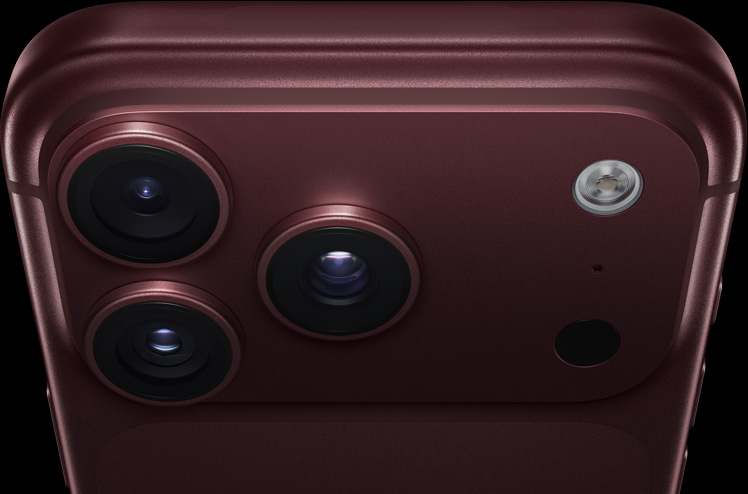
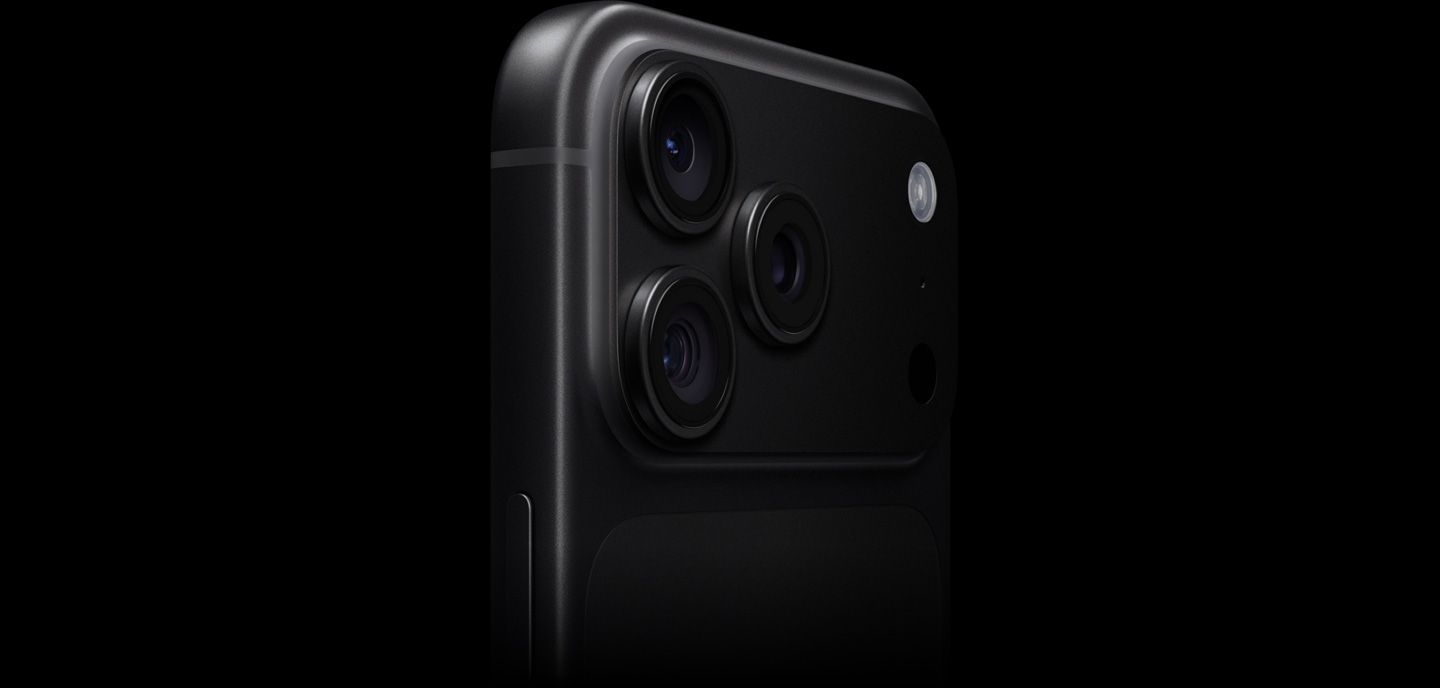
The headline change is the new 48MP Fusion Main camera with a mechanical variable aperture.
It is the first time an iPhone has had a proper mechanical variable aperture. Apple says it moves from roughly f/1.48 in low light to f/4 for greater depth of field, using six laser-cut blades.
In plain English, it can open wider to let in more light, or close down to keep more of the scene in focus.
That is a proper camera feature rather than another software effect with a more exciting name.
Apple also says the camera can move between f/1.48, f/1.8, f/2.8 and f/4.0, with Pro controls for people who want to adjust things manually.
Photography enthusiasts are understandably interested.
Early reviews from the Telegraph, GQ and The Independent describe the variable aperture as the standout feature for people who care about photography. They also point out that it may have limited practical value for anyone who simply points the phone at something and taps the button in automatic mode.
That sounds about right.
If you are taking pictures of grandchildren, dogs, meals and the inside of the shed, the phone will make most of the important decisions for you.
The clever aperture may help. It may improve low-light results. It may give you more control over the background and depth of field.
But you probably will not be standing in the garden thinking, “That portrait would have been much better at f/2.8.”
You will press the button and hope nobody moved.
MTG: A faster chip and a larger battery
The iPhone 18 Pro uses Apple’s A20 Pro chip, built on a 2nm process.
That will be extremely fast.
It may also be more power-efficient. Apple is making the usual claims around performance, graphics and on-device intelligence, alongside a new vapour chamber to help manage heat.
For most people, however, the important question is not whether the chip is fast.
It is whether the phone still does everything they need without becoming irritating.
Can it open apps quickly? Take photos? Handle messages? Run navigation? Keep up with work? Survive a day without becoming a warm, expensive paperweight?
Battery life matters more than another percentage figure on a launch slide.
Apple claims up to 36 hours of video playback on the iPhone 18 Pro and up to 45 hours on the iPhone 18 Pro Max, based on eSIM models.
Apple describes this as the largest battery-life jump it has made on an iPhone.
Those are claims worth testing properly over time, rather than applauding during a launch presentation.
Battery performance in a controlled test is useful. Battery performance after several months, with real apps, poor signal, cold weather, Bluetooth, updates and a user who forgets to charge it is rather more useful.
MTG: Is £1,199 worth it on day one?
I am not going to tell you to buy it.
I am also not going to tell you not to buy it.
That is not because the answer is complicated. It is because the answer depends on what you already own and what problem you are trying to solve.
If your existing phone is broken, unreliable or no longer doing what you need, the iPhone 18 Pro may be worth considering.
If you make money from photography or video, the variable aperture may be meaningful.
If battery life is a daily problem, the claimed improvement may matter.
If you simply want a new phone because a new phone has appeared, that is a different conversation.
This is where the More Than Gadgets rule comes in:
Replace it when it breaks, not just when a new model arrives.
There is nothing wrong with wanting something new. I like new technology. I enjoy seeing what manufacturers have managed to squeeze into a rectangle that is still expected to fit in a trouser pocket.
But “new” is not the same as “necessary”.
A phone that is two or three years old may still be fast enough, reliable enough and perfectly capable of taking photographs of the dog looking guilty.
You might not need a new camera system.
You might need to delete 14,000 screenshots.
MTG: What are we really seeing?
The iPhone 18 Pro may turn out to be excellent.
The camera could be genuinely useful. The battery claims could hold up. The A20 Pro may be enormously powerful. The phone may last for years.
None of that changes how the launch works.
We are shown a product in perfect lighting, surrounded by people who have been given early access and a reason to talk about it. We are told it is powerful, pro-level, exciting and worth wanting.
Then the order button appears.
That does not mean everyone involved is pretending. It means we should understand the environment before treating the noise as independent proof.
A launch is designed to create desire.
A review should create understanding.
Those are different jobs.
My advice is simple: watch the early coverage if you enjoy it, but wait for the longer-term tests. Look for people using the phone away from the launch event. Look for battery results after the novelty has worn off. Look for camera comparisons in ordinary rooms, ordinary streets and ordinary British weather.
And before spending £1,199, ask yourself one question:
What can this phone do that the one in my hand cannot?
If the answer is genuinely useful, fair enough.
If the answer is mostly “look at the new colour”, perhaps keep the old one a little longer.
You can read more of the MTG view in the earlier iPhone Duo and Galaxy Z Fold 8 piece, or browse the full blog archive. For the official specifications and launch information, Apple’s UK iPhone 18 Pro page has the details.
if anything I've said today struck a chord with you and you'd like a chat or if you have a particular challenge with energy, power & infrastructure, business generally or you might like to use the studio, drop me an email at andrew@aelhawley.com - if you've watched the video version of this blog you can drop a comment below and, I think I'm supposed to say like and subscribe but I won't. See you on Sunday in the field.. that to be clear, isnt my garden.