Square Roots: What Has to Be Different This Time

This is the second post in the Square Roots series, looking at whether Square Chapel in Halifax could have a future as an arts centre.
The first post was about why the building matters. Built in 1772, it has been part of Halifax for nearly 250 years, and it has a shape and character that would be hard to replace.
This one is about the less romantic part: the money.
Not because money matters more than art. It doesn't. But if the building is ever going to reopen and stay open, the numbers have to stack up. A town can love a building and still not be able to stop it failing financially. Annoying, but true.
Square Roots: This is not about blame
Square Chapel closed suddenly in February 2025.
The venue was being run by Square Chapel CIC, which had taken over its operation in 2020. Arts Council England withdrew its funding in May 2025, and Square Chapel left the Arts Council’s national portfolio.
In May 2026, HMRC secured a winding-up order against Square Chapel CIC in the High Court. The company became subject to a compulsory winding-up order and liquidation proceedings.
Those are the facts, but they are not really the point of this piece.
I'm not interested in writing a post-mortem about who did what, who should have spotted what, or which decision might have changed the outcome. I don't know the former operator's internal finances, and I'm not going to pretend I do. The question I'm interested in is much simpler:
What would have to be different for a venue of this size and shape to survive?
If Square Chapel is going to have another life, that's the question worth spending time on.
Square Roots: The economics are genuinely difficult
A mid-size arts venue has an awkward set of problems. It is big enough to cost real money, but not always big enough to spread those costs across enough activity to make life comfortable. There is a building to maintain, staff to pay, equipment to look after, licences, insurance, utilities, marketing, cleaning, repairs, and all the other background costs that keep turning up whether the show sold well or not.
Then you've got the audience side of it. Tickets have to be affordable enough that people will actually buy them. Artists and production teams need paying properly. The building has to be heated, but not like you're trying to warm the whole of Halifax. The bar needs to work, but it can't be expected to turn a quiet Tuesday into a Saturday night by sheer force of optimism.
And, of course, the venue is competing for people's time, attention and money. That's not a complaint. It's just the market every venue lives in.
A building like Square Chapel can be culturally valuable without every event being commercially profitable. That's one reason public funding matters. Public money can support work with real social, artistic or community value that simply won't pay for itself through ticket sales alone.
But if the whole thing leans too heavily on grant funding, it is fragile. If a grant reduces, stops or changes direction, the organisation is left staring at the same fixed costs with less income to cover them. The building doesn't suddenly get cheaper because the funding landscape has changed. So this isn't an argument against grants. It's an argument against expecting grants to carry the whole building on their back.
Square Roots: Trading income needs to be part of the structure
If I were looking at the future of Square Chapel, I'd want earned income baked into the model from day one. Not as a hopeful line buried at the bottom of a spreadsheet, but as part of how the place actually works.
That could mean venue hires, business events, conferences, private functions, hospitality, workshops, screenings, partnerships and other commercial activity, provided it sits comfortably with the building's cultural purpose.
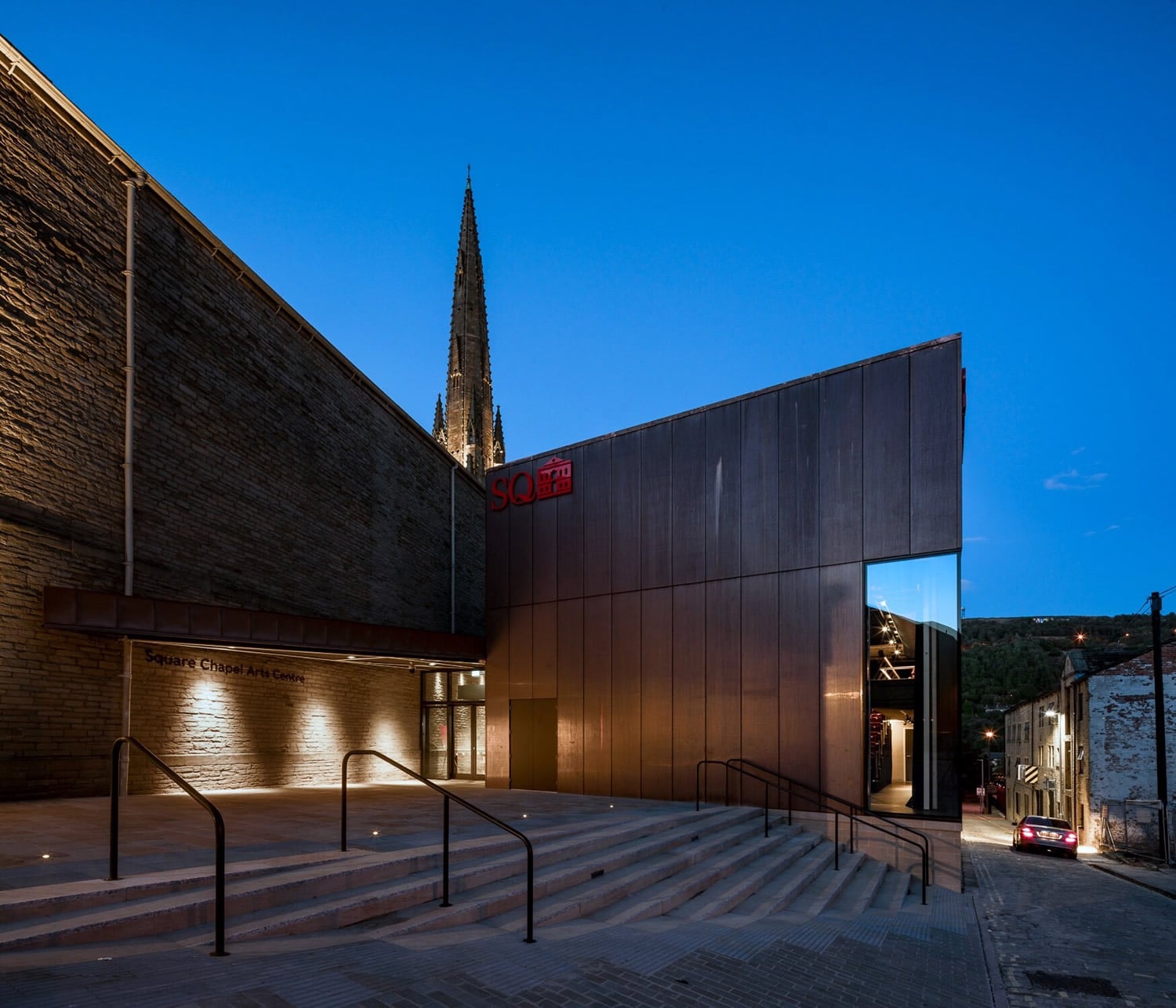
I'm not talking about turning Square Chapel into a generic events box with a few performances sprinkled over the top so nobody notices. The building has a clear identity. Under the lease, the lease-specified permitted uses are performing arts, live performance, moving image and visual arts, together with related and ancillary processes. That's a useful boundary, and a useful description of what the building can be, though any purchaser or operator would still need their own legal, planning and title advice.
And there is plenty of room inside that description. A performance venue can host a daytime business event. A film space can host a discussion or training session. A café and bar can serve audiences, artists, businesses and people who just want to spend some time in the building. A rehearsal or studio space can do more than one job across a week.
So for me the issue isn't whether commercial activity belongs in a cultural building. It does, if it supports the purpose of the place, pays its way and helps keep the doors open. That's very different from chasing every possible hire until the building forgets what it is.
Square Roots: The seasons do not all look the same
There is another practical point, and it is sitting right next door.
The Piece Hall's summer events programme is an amazing thing for Halifax. It brings life into the town centre and makes a real contribution to the local economy. When thousands of people are coming into town, that helps the bars, the cafés, the shops and the wider visitor economy too. That's good news for Halifax. Full stop.
It is also a real consideration for any future operator of Square Chapel. Not as a complaint about a neighbour, because it isn't one. But if you're running a venue a few yards from a major outdoor summer concert site, night-time programming becomes a practical question quite quickly. And trying to go head-to-head for evening audiences on those nights doesn't strike me as a smart use of anyone's energy.
The more useful question is what Square Chapel does with the fact that all those people are in town.
To me, that is not a problem to put up with. It is one of the best bits of luck the building has. During those months, thousands of people are effectively on the doorstep. So build with that in mind. Daytime trading that works for a visiting crowd. Food and drink. Somewhere to sit, meet and gather before or after an event. Cultural activity during the day. Workshops, exhibitions, screenings, hires and other uses that can thrive while the evening belongs to somebody else.
Rather than fighting the summer, I think a future operator could build around it. For three or four months of the year, the building may need a different rhythm from the rest of the calendar - more alive in the day, different in the evening, shaped around the reality of where it sits and what is happening around it.
That is simply my view of what a workable seasonal model might look like.
And it is another reason the wider partnership matters. Calderdale Council, Arts Council England, the Save Square Chapel community group and the local business community matter more, not less, if the aim is to make the venue work with the town's biggest summer draw rather than pretending it isn't there.
Square Roots: Not another version of the same organisation
I don't think the answer is simply another version of the same organisational shape, with a new name over the door and the same assumptions underneath. That's not a dig at any individual or previous organisation. It's just a practical point. If a model hasn't proved durable, doing roughly the same thing again and hoping for better luck feels a bit daft.
My own view is that a venue like this stands a better chance with a broader mix of income, uses and partnerships from the start, rather than leaning too hard on one route and hoping it stretches.
And for me that means four groups matter from the outset: Calderdale Council, Arts Council England, the Save Square Chapel community group and the local business community.
Each brings something different. The Council understands the town, the building's place in Halifax and the wider civic picture. Arts Council England sits inside the funding and cultural framework around the building. The Save Square Chapel group brings local knowledge, community energy and lived connection to the place, which are part of what makes a venue sustainable. And the local business community is not some spare part to be tapped for sponsorship at the end. Business belongs in the room from the start, because a lively town centre is good for business and a working venue is part of what makes a town somewhere people want to spend time. That is not charity. It is straightforward self-interest, and there is nothing wrong with saying so plainly.
The Council's stated interest is not a blank cheque. Arts Council England cannot be expected to carry the whole operating model on its own. A community campaign, however strong, does not by itself solve plant, contracts, cash flow and day-to-day trading. And local business cannot just be treated as a wallet with legs. What the four need to help build is a financially stable working model. Not a rescue package, not a burst of goodwill, not a grant that runs out in three years. Something that secures the building, secures its long-term future, and secures its status as an arts centre. Goodwill matters, but goodwill is not a business model.
So yes, public funding where it is available and appropriate. Earned revenue. Commercial partnerships that make sense. A programme that brings people into the building at different times of day and on different days of the week.
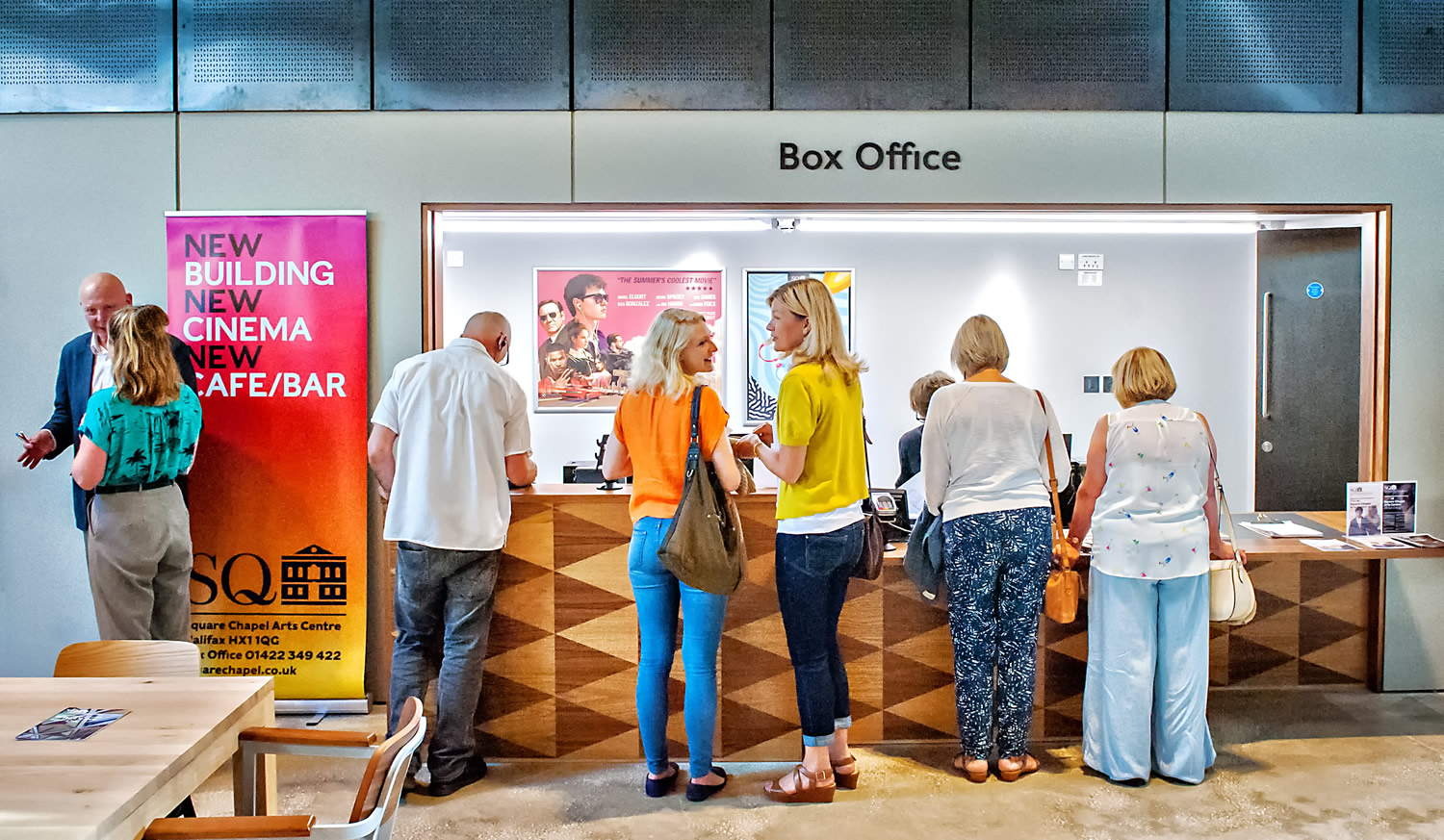
Because the venue isn't only a room where shows happen. It's a building with several possible income streams and several possible communities around it. The old chapel, the auditorium, the cinema or studio spaces, the café and bar, the foyer and the building's position next to The Piece Hall all form part of the opportunity. Each has to work with the others.
And the ambition should be bigger than Halifax on its own. A place like this could be a cultural icon for West Yorkshire, not just for the town it stands in.
That matters because Square Chapel was built in 1772 for a very simple human need: a room where people could gather and hear and take part. That is still the foundation under everything. Any model built now ought to sit on those foundations, not on some borrowed template from somewhere else.
A busy evening programme on its own will not solve a quiet daytime operation. And a full diary of business hires is not much of a success if it squeezes out the artists and audiences the building is there to serve. The model has to be mixed, deliberate and honest.
Square Roots: Everyone needs to be in the room early
The other big change, in my view, is who gets involved in shaping the plan. Business, the artistic community and the people with a history in the building need to be in the room early, while the awkward questions are still being asked, not once everything is boxed off and somebody just wants a nod.
Businesses understand trading, cash flow, customers and risk. Artists understand what the building needs in order to make good work and support creative people. And the people with a history in Square Chapel understand its character, its role and why it matters to Halifax.
That is also why I want to give proper credit to the Save Square Chapel community group. They have run an amazing campaign to get the building open again. They are not some little footnote at the bottom of the page. In my view, they are one of the four legs any credible future has to stand on.
I've already been working with that group, and I don't say that to make it sound grander than it is. It is simply true. But I got to the point where I felt I needed to do more and be more directly involved. That's what moved me from supporting the campaign to putting my own name to a serious attempt to help shape what a workable future might look like.
Part of the reason I think I can usefully contribute is that my career and training have given me a particular set of skills that this sort of challenge needs. Practical ones: understanding buildings and plant, budgets and cash flow, contracts, keeping an organisation trading, and getting different interests round the same table. A building like this needs cultural care, yes, but it also needs someone involved who has actually run things.
And the building has to work for the people who live around it and use the town. Goodwill matters, but goodwill on its own doesn't pay the bills. Equally, a business plan that forgets the people is just as daft.
And when I say people, I mean it properly. The people who used the building, the people who live around it, the artists and the businesses. In my view, those voices need to be heard early and heard properly if this place is going to have a future that feels real and lasts.
Those perspectives are not naturally identical, which is exactly why they need to meet early. The useful plan will probably not be the one that makes everybody instantly comfortable. It will be the one that gets the awkward disagreements out on the table before they turn into expensive surprises.
Square Roots: The wider position
Arts Council England is a creditor because it holds a legal charge on the building arising from a previous capital award. Following the winding-up order and the building's placement in the custody of the Official Receiver, ACE instructed Watling Real Estate as Receiver in connection with its legal charge. Watling is now marketing the property.
Arts Council England has said it remains committed to seeing the building returned to cultural use for the communities of Halifax.
Calderdale Council has said it does not own the building, has ruled out direct financial intervention because of budget constraints, and wants to see it return to cultural use as an arts centre for the borough.
That does not make the situation simple, but it does tell you something important. Any future proposal has to work within the building's legal, financial and cultural realities. Nobody is going to stroll up, turn the key and carry on as before as if nothing happened.
Square Roots: This is my view, not a promise
I am exploring whether Square Chapel could be brought back into use.
I am not announcing a bid. I am not making a promise. I am not asking people to fund anything.
What I am saying is that, if I were to be involved, this is the basis on which I would want to work.
It would need Calderdale Council, Arts Council England, the Save Square Chapel community group and the local business community to matter in the picture, each bringing what only they can bring.
Less blame, more structure.
A building with trading income at the core of the model. A cultural purpose that is protected rather than watered down. A proper relationship between business, artists, the community and the people who know the building's history. And a plan tested against the reality of running an old, substantial building in the real world.
Square Chapel does not need another beautiful idea that becomes somebody else's problem six months later. It needs a version of the idea that can pay the bills, make room for good work and give people a reason to keep coming back.
That is a harder conversation than simply saying the building should reopen. It is also the conversation that matters.
You can find the wider @aelhawley blog archive here. The next post will look more closely at what Square Chapel could stand for in Halifax, without pretending that a vision is the same thing as a business plan.
Source note: Watling Real Estate marketing material, Arts Council England statements, Calderdale Council statements, Equity, The Stage and Telegraph & Argus.
if anything I've said today struck a chord with you and you'd like a chat or if you have a particular challenge with energy, power & infrastructure, business generally or you might like to use the studio, drop me an email at andrew@aelhawley.com - you can drop a comment below and, I think I'm supposed to say like and subscribe but I won't. See you on Sunday in the field.. that to be clear, isnt my garden.